Last updated: October 9, 2026
Quick answer: Make texting your advisors' default. Get consent on every RO, then build six messages: the appointment reminder, the video inspection, the status update, the "car is ready" payment link, the declined-work follow-up and the campaign. Digital estimates get a median approval in 6 minutes, against 22 to 23 hours by phone. Roll it out in three weeks, starting with consent.
Your service advisors leave voicemails all day. A few people call back. The rest? It's ROs sitting open and technicians waiting for approvals.
This isn't a people problem. It's a physics problem. Phone calls need two people available at the exact same moment. Text messages don't.
That's it. That's the whole thing.
Everything else in this guide follows once you accept that your customers check their phones 205 times per day but still let your calls go to voicemail.
If you want to see what this looks like inside a service lane, start with The 5 Magic Buttons Every Service Department Actually Needs.
So it's time to make SMS the default way your service advisors talk to customers. Here's the playbook they should use.
Do you need permission to text service customers?
Yes. One minute on this, then we're done, I promise.
In the United States, you need permission to text customers. The law is called the TCPA. Damages run $500 to $1,500 per message if you get it wrong.
Add this to every repair order:
"I agree to receive text messages from [Dealership Name] about my vehicle service."
You also need an automatic opt-out. Customer texts "STOP," they're out.
That's the core of it. Get consent. Honor opt-outs. Marketing texts need their own opt-in, and this isn't legal advice, so run your wording past your counsel.
Which texts should service advisors send?
There are six text messages that matter when it's time to communicate with customers.
- The Appointment Reminder
- The Video Inspection
- The Status Update
- The "Your Car Is Ready" Message
- The Follow-Up (90 Days Later)
- The Campaign
1. The appointment reminder
"Hi John, this is Mike at Downtown Honda. We're set for you and your Accord tomorrow at 9 AM."
Send this automatically 24 hours before the appointment. It's the easiest way to cut no-shows. Our guide to service no-shows goes further.
Why it works: People forget appointments. This reminds them. Revolutionary stuff.
2. The video inspection
This is your money play.
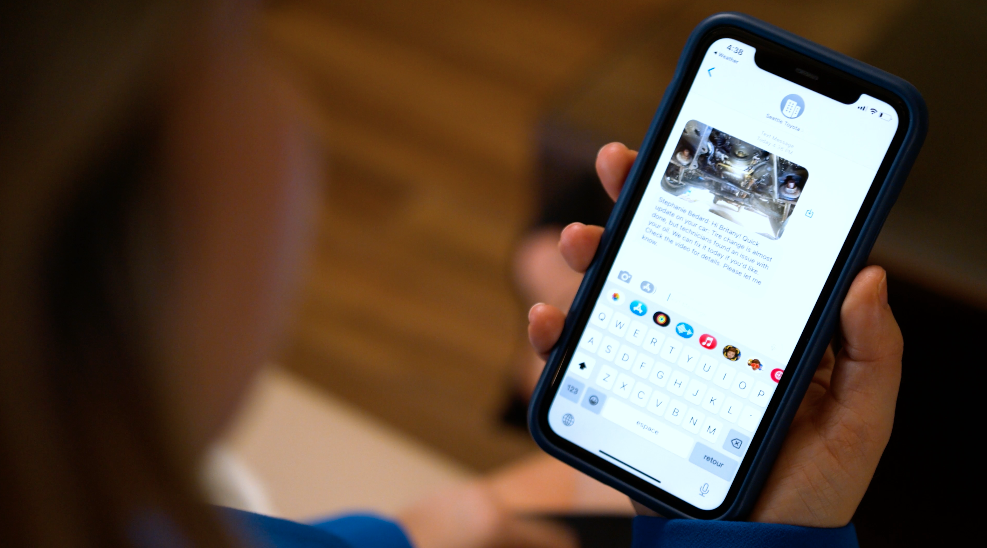
"Found worn brake pads. Here's the video: [link]. $340 to fix. Reply YES to approve."
Your tech films a 15-second video in the bay showing the problem. Customer sees it, approves it, done.
Seeing the problem changes the answer. J.D. Power found approval rates went from 24% to 51% when photos or video were added to the inspection.1 Same recommendation, different proof. And it's fast. On our platform, the median digital estimate is approved in 6 minutes.2
The best part: customers stop thinking you're upselling them. They saw the worn pads. They made the call. More on this in our video MPI guide.
3. The status update
"Parts arrived. Still good for 4 PM pickup. I'll text when it's ready."
This kills the "Is my car done yet?" calls. Customers call because you haven't told them anything. Tell them something.
Pre-build this as a one-click template. It takes two seconds to send and saves a phone call. Do that math across 20 customers a day.
4. The "your car is ready" message
"Your Accord is ready. Pay here: [link]. Speeds up pickup."
A lot of customers will pay from their phone before they arrive. At Honda and Toyota of Seattle, over 75% of customers now pay by phone before picking up their vehicle.3 That's most of your checkout line, gone.
Your service lane stops backing up. Your cashier focuses on people who need help, not routine payments.
5. The follow-up (90 days later)
"We recommended tires in June. Buy 3 get 1 free this month. Want to book? Reply TIRE."
This one runs on autopilot. The system reads declined services from your DMS, waits 90 days, and sends the message.
Customers decline work for two reasons: wrong timing or no money. Three months later, both problems often fix themselves. Here's more on following up on declined service.
6. The campaign
This is different from the automatic follow-up. This is you deciding to fill slow weeks, or push a specific service.
"Winter's coming. We're doing free brake inspections this week. Takes 20 minutes. Want to book? Reply BRAKE."
Follow-ups target individual customer needs based on their history. Campaigns target your business needs based on your schedule.
Slow Tuesday? Send a campaign to 200 customers offering express oil changes. Winter tire season? Text everyone who bought tires 3 years ago. Recall notice? Text everyone affected instead of calling 500 people.
The key is to make your marketing campaign relevant.
"20% off everything" is spam. "Your vehicle is due for its 30K service" is useful.
At North Penn Volkswagen, campaigns get a 10 to 15% response rate within 24 hours. On 200 texts, that's 20 to 30 replies. Try getting that from a mailer.
Why isn't your DMS texting feature enough?
Your DMS probably has texting now. It's also probably making your life harder.
The problem: messages live in one system, customer records live in another. Your advisors check two places to understand what's happening. When they get an approval, they copy it from the texting tool into the DMS notes.
That's the same work with an extra step.
A real integration puts the conversation where the RO is:
- Customer and RO data sync from the DMS, so every text sits on the right repair order
- Approvals and status updates are recorded in the customer's history
- Payments processed by text write back to the RO automatically (on CDK today)
With Kimoby, your advisors text from a screen that's already connected to your DMS. Be clear on one limit: payment write-back works on CDK only for now, and writing approved estimate lines back to the RO is still in development on every DMS. See how Kimoby works with your DMS.
What do advisors get out of it?
Time, mostly. Every phone-tag loop you replace with a text gives minutes back to the advisor.
It's the time difference between playing phone tag with 20 customers and texting them.
They can spend that time closing more ROs and selling more jobs.
Your technicians wait less too. At Gus Brown Buick, over half of customers respond to estimates within 10 minutes, so cars spend less time on the hoist.
Faster approvals mean more completed ROs. More completed ROs mean more revenue per bay.
How do you roll out texting in your service department?
The technology part is easy. The behavior change takes longer but isn't complicated.
Week one: Add the consent checkbox to your RO intake. Train advisors to mention it: "We'll text you updates, most people prefer it."
Week two: Connect the platform to your DMS. Build the six message templates. Test with a couple of advisors.
Week three: Roll out to the full team. Track approval rates and time savings.
Conclusion
Your competition will do this eventually. The only question is whether you do it first, or later because you have to.
Texts get read. Voicemails wait.
That gap is costing you money right now. If you want to see the six messages running on your own phone, book a demo.
FAQ
Do service advisors need customer consent to text?
In the US, yes. Get written consent on the repair order for service texts, a separate opt-in for marketing texts, and honor every STOP request. This isn't legal advice, so check your wording with your counsel.
What texts should a service advisor send?
Six cover most of the visit: the appointment reminder, the video inspection, the status update, the "your car is ready" payment link, the declined-work follow-up and the campaign.
How fast do customers approve estimates by text?
Across 871 dealerships, the median digital estimate is approved in 6 minutes, and 88.2% are approved within an hour. Phone approvals take 22 to 23 hours.
Should advisors text from their personal phones?
No. There's no audit trail and no opt-out tracking, and the conversation history leaves when the advisor does. Use a platform that texts from the dealership's number.
Sources
[1] J.D. Power 2024 Aftermarket Service Index, via Auto Remarketing.
[2] Kimoby, The Cost of Silence: Dealership Service Report (August 2026). 871 dealerships, 16.8 million repair orders, 12 months ending February 2026. Phone approval times are industry data as cited in the report.
[3] Kimoby case study: Honda and Toyota of Seattle.
[4] Reviews.org, cell phone usage survey.
[5] DNC.com, penalties for TCPA violations.