How to Improve Automotive Service Department Communication
Last updated: October 15, 2026
Quick answer: To improve service department communication, move routine updates from the phone to text, send video with your inspections, automate the repetitive messages and put your advisors on one system tied to the DMS. Poor communication shows up in 37% of negative dealership reviews, more than any other issue. And digital estimates get approved in a median of 6 minutes, against 22 to 23 hours by phone.
Most service departments have a communication problem, and most of them don't know how bad it is. Poor communication is the most common complaint in negative dealership reviews, cited in 37% of them according to Widewail's Voice of the Customer report.
You might think the fix is more phone calls. It's not. It's fewer. Dealerships that improve service department communication do five things:
- They stop using phone tag as a default
- They move routine updates to text
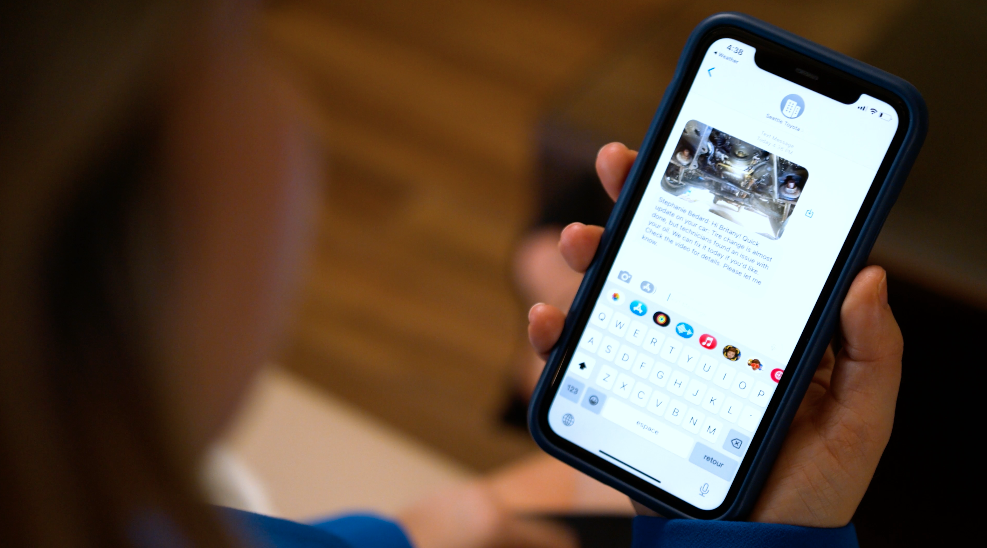
- They send video instead of explaining over the phone
- They automate the repetitive stuff
- They give advisors tools that actually talk to the DMS
That's it.
Key takeaways:
- Communication is the #1 complaint. 37% of negative dealership reviews cite poor communication, more than any other issue.
- Phone tag is killing your RO count. Every hour your advisor spends on voicemail is an hour they're not writing work.
- Customers read texts. 90% of texts are read within 3 minutes (Optimonk 2026). A voicemail can sit until tomorrow.
- Video kills ambiguity. The share of customers who get the recommended work done more than doubles (24% to 51%) when they see what's wrong (J.D. Power 2024 ASI).
- Automation is a retention tool, not just a time-saver. Honda & Toyota of Seattle saves 160+ hours a month and moved 75% of customers to mobile payments (Kimoby case study).
We've sat in more service drives than we can count. Every single one of them has a communication problem. The good ones know it. The rest are leaking money and don't fully understand why.
When a service manager tells us their CSI is tanking or their CP/RO numbers are soft, the root cause is usually the same thing: communication.
The good news? Fixing it isn't complicated.
Table of Contents
- Why is service department communication broken at most dealerships?
- Tactic 1: Kill phone tag
- Tactic 2: Default to text, not calls
- Tactic 3: Show, don't tell (use video)
- Tactic 4: Automate the boring stuff
- Tactic 5: Give advisors one system, not six
- Tactic 6: Fix the internal communication, too
- What does better communication actually earn you?
- FAQ
Why is service department communication broken at most dealerships?
An advisor is on the phone. There's a line of customers at the counter. The phone rings, the advisor puts it on hold, writes a note on a sticky, and picks up the next call. A tech walks up wanting to clarify a repair. The advisor waves him off, still on the phone. The customer at the counter is getting annoyed. Somewhere, a $1,500 approval is sitting in voicemail, and nobody's going to hear it until 3 PM.
This is normal. This is how most service drives run. And it's insane.
It's not broken because your advisors are bad. They're doing the best they can with the tools they have. It's broken because the whole model assumes the phone is still the primary channel. It's not. It hasn't been for a decade.
The J.D. Power 2025 CSI Study lists communication shortfalls among the top three pain points dragging down service satisfaction, alongside appointment wait times and first-time fix rates. Widewail's 2023 Voice of the Customer report goes further. 37% of negative reviews cite poor communication as the core issue, more than any other category, including pricing complaints (20.7%).
More than one in three angry customers is angry because nobody updated them, or because they had to chase you. That's a fixable problem. And every 1-star review it generates costs you in CSI and repeat visits.
So what do you actually do about it? Six things.
Tactic 1: Kill phone tag
Phone tag is a tax.
Every minute your advisor spends leaving a voicemail, waiting for a callback, and re-explaining the same recommendation is a minute they're not writing work or moving the next customer through.
And the calls you miss cost more than the ones you play tag on. Between 20% and 30% of service calls go unanswered (Marchex, as cited in our Cost of Silence report).
The fix is simple. Every routine communication that can happen via text should happen via text. Appointment confirmations, reminders, status updates, approval requests, vehicle-ready notifications, pickup instructions. None of these require a phone call.
Save the phone for the hard conversations. Explaining a complex diagnosis. Rebuilding trust with a frustrated customer. That's where your advisors add real value.
Tactic 2: Default to text, not calls
The numbers on this are hard to argue with. SMS has a 98% open rate, and 90% of texts are read within 3 minutes (Optimonk 2026, Infobip 2025). Compare that to a voicemail your customer may not check until tonight.
When you switch routine communication to text, a few things happen:
- Approvals come back faster. Across 871 dealerships, the median digital estimate is approved in 6 minutes, and 88.2% are approved within an hour. By phone, it's 22 to 23 hours (The Cost of Silence).
- Your bay turns faster. The tech isn't sitting waiting for a decision. The car gets done, the next one comes in.
- Your customer is happier. They're not stuck on hold. They're at work or picking up their kids, and they glance at a text when they have a minute.
One thing to flag: don't let your team text from personal cell phones. Big liability. No audit trail, no consent tracking, and when an advisor leaves, the customer relationship walks out the door with them. Use a real dealership SMS platform that integrates with your DMS.
Tactic 3: Show, don't tell (use video)
This is the biggest single upgrade most service departments can make. Most still aren't doing it.
Customers don't trust your advisor when they call and say "you need brakes." Of course they don't. They've been burned before. Plenty of customers walk in defensive, half-expecting to hear they need $1,200 in work they don't actually need.
Send a 30-second video of the tech pointing at the worn brake pads, and the whole dynamic changes. They can see it. They don't need to trust you on faith. The share of customers who get the recommended work done more than doubles with visual evidence: 24% without photo or video, 51% with (J.D. Power 2024 ASI).
Here's what's wild. 64% of customers say they want photo or video documentation with their MPI. Only 26% of mass market and 44% of premium customers actually get it (J.D. Power 2026 CSI).
That's a massive gap between what customers want and what dealers deliver. Close it, and you're ahead of most of your competition by default.
The pattern we see when stores roll out video MPI is consistent. Advisors spend less time defending recommendations, and customers say yes faster.
Tactic 4: Automate the boring stuff
Your advisors shouldn't be manually sending appointment reminders. They shouldn't be manually confirming appointments the day before. They shouldn't be manually sending "your car is ready" texts. These are the easiest things in the world to automate, and every minute spent on them is taken from higher-value work.
Honda & Toyota of Seattle is a good example. Two high-volume stores, each handling 90 to 150 cars a day. Every interaction ran through the phone, and customers waited on hold or played phone tag. They automated appointment confirmations, reminders, advisor introductions, vehicle-ready notifications and payment requests.
The result: 160+ staff hours saved every month on appointment confirmations alone. That's the equivalent of a full-time employee. More than 75% of customers now pay from their phones before picking up the car, which ended the end-of-day line at the cashier. (Full case study here.)
That's the real payoff with automation. You don't just save time. You get capacity back.
Tactic 5: Give advisors one system, not six
Walk into any service advisor's workstation and count the applications open on their screen.
DMS. Email. Texting tool (maybe personal phone). Scheduling. Separate app for video. CRM for sales follow-up. Another tool for payments. Another one for loaner tracking.
Every context switch costs the advisor time. When systems don't talk to each other, the advisor ends up retyping the same customer info three times. Something always falls through the cracks.
The dealerships that nail communication are the ones that consolidated. They run their service lane off one platform that sits on top of the DMS and handles the whole workflow: texting, video, estimates, payments, loaner management, reporting. Everything tied to the same customer record.
That's why we built Kimoby as a Dealership Engagement System (DES)™. With Kimoby on top of your DMS, your advisors handle every customer touchpoint in one place. They stop retyping customer data, and they stop wondering whether Joe ever called that customer back. It doesn't replace everything yet. There's no native online scheduler, so most stores keep the one they have.
Tactic 6: Fix the internal communication, too
External communication gets all the attention. Internal communication kills just as many ROs.
Here's how it usually goes. A tech finds something during the MPI. He walks over to the advisor to flag it. Advisor is on the phone. Tech waits, gives up, writes it on a sticky note, leaves it on the desk. Advisor gets the message 40 minutes later, and by then the customer is already at home. Now it's a phone call instead of a text, happening after the car has been on the hoist for an extra hour.
The same tools that fix external communication should fix this too. Techs and advisors working off the same platform. Tech records a 30-second video, pushes it to the advisor's feed, advisor pushes it to the customer. The sticky notes and the back-and-forth between the bay and the counter disappear.
When your service department runs on one shared communication layer, everything moves faster. Parts counter, techs, advisors, cashier, service manager. Everybody on the same thread, seeing the same customer record, handing off cleanly.
What does better communication actually earn you?
A store that fixes its communication sees measurable wins across four areas:
- Higher approval rates. More work closed. Customers who see photo or video are about twice as likely to get the recommended work done (J.D. Power 2024 ASI).
- More capacity. Automation frees up advisor hours that were going to phone tag. Honda & Toyota of Seattle reclaimed 160+ hours a month.
- Higher CSI. Advisor CSI scores average 31 points higher (on a 1,000-point scale) when photo or video is shared with the MPI (J.D. Power 2024 CSI). That matters, since CSI drives OEM incentives and repeat visits.
- Better retention. Across 871 dealerships, customers with a digital conversation on their RO came back about 6 points more often (The Cost of Silence). That's a correlation, not proof, but it points the same way.
For a store doing 1,500 ROs a month at $222 CP gross per RO (the Q4 2024 average per Optimum), even a small lift in approvals adds up fast. Run it with your own RO count and see where you land.
That's the business case.
FAQ: Service department communication questions answered
What's the #1 communication problem in dealership service departments?
Phone tag. Advisors spend a big part of their day leaving voicemails and waiting for callbacks, which slows approvals and bay turnover. Every routine conversation that can happen by text should happen by text.
Is text really better than calling for service updates?
For most routine updates, yes. Customers reply when they have a minute, which usually means minutes after the text instead of the next day. The phone still has its place for complex diagnostics and difficult conversations. It just shouldn't be the default for "your car is ready."
How much time does communication automation actually save?
It depends on your volume. Honda & Toyota of Seattle, two stores handling 90 to 150 cars a day each, saves more than 160 hours a month on appointment confirmations alone. The biggest wins come from confirmations and vehicle-ready notifications, because those are the highest-volume repetitive messages.
Can advisors just text customers from their personal cell phones?
Technically yes, but it's a bad idea. Personal phones create TCPA exposure, leave you with no record of customer consent, and take the customer relationship with the advisor when they leave for another store. A dealership-grade SMS platform keeps every conversation tied to the store and integrated with the DMS.
What does "integrated communication" actually mean?
It means your texting, video, estimates, payments and DMS all share one customer record. Instead of an advisor logging into four tools and retyping the same info each time, everything lives in one thread tied to the RO. That's the core idea behind a Dealership Engagement System (DES)™ like Kimoby.
How do we get our team to actually adopt new communication tools?
Pick tools that save the advisor time in the first week. The ones that fail usually add steps to the workflow instead of removing them. A simple test: ask an advisor to use it for a morning. If they're still using it that afternoon without being told to, you've picked the right tool.
What's the first step if we want to fix our service department's communication?
Track it for a week. Have your advisors log how much time they spend on voicemails, callbacks and chasing customers. Seeing the real baseline is what makes the business case obvious to whoever needs to sign off. From there, appointment reminders are usually the easiest first thing to automate.
The bottom line
Communication is the single biggest lever a service manager has. Most stores are leaving it on the floor.
You don't need to hire more people or renovate the drive. You need to stop using the phone for things that should be a text, send video instead of explaining a bad belt over the phone, automate what a computer can handle, and cut the number of systems your advisors juggle.
Most stores haven't done it yet. The ones that have are pulling ahead.
If you want to see what this looks like in your shop, book a demo. We'll walk you through what's working at stores like yours and figure out whether it makes sense for you.
Sources
- Digital Dealer, citing Widewail 2023 Voice of the Customer report. Poor communication cited in 37% of negative dealership reviews, more than any other issue.
- J.D. Power 2025 U.S. Customer Service Index (CSI) Study. Communication shortfalls cited as one of the top three drags on service satisfaction.
- J.D. Power 2024 U.S. Customer Service Index (CSI) Study. Advisor CSI averages 911 with photo/video documentation, 880 without. A 31-point lift on the 1,000-point scale.
- J.D. Power 2026 U.S. Customer Service Index (CSI) Study. 64% of customers want photo/video with their MPI. Only 26% of mass market and 44% of premium customers receive it.
- J.D. Power 2024 U.S. Aftermarket Service Index (ASI) Study, via Auto Remarketing. 51% of customers who receive an MPI with photo/video have the recommended work done, vs. 24% without.
- Optimonk, "43 SMS Marketing Statistics for 2026". SMS open rate 98%. 90% read within 3 minutes.
- Infobip, "SMS Marketing Statistics: Key Figures for 2025". 90% of SMS messages read within 3 minutes (Validity research).
- Kimoby Success Stories, Honda & Toyota of Seattle. 160+ staff hours saved monthly on appointment confirmations. 75%+ of customers pay via mobile payments.
- Optimum Q4 2024 Dealer Financial Analysis Report. Average CP gross profit per RO: $222.
- Kimoby, The Cost of Silence: Dealership Service Report (August 2026). 871 dealerships, 16.8 million repair orders, 12 months ending February 2026. Approval speed and retention figures are observed correlations, not controlled experiments. Unanswered-call range from Marchex and phone approval times from industry data, as cited in the report.
You May Also Like
These Related Stories
Video MPIs: The Tool That's Adding $1,993 Per Repair Order
How to Increase Your Dealership CSI Score