Last updated: October 20, 2026
Quick answer: To make fixed ops your most profitable department, train your advisors to sell, manage gross profit per RO instead of hours, set tech goals from each tech's own 90-day average, and treat parts inventory like cash. Then remove friction with daily text updates and payment by text. The average U.S. dealership had over $513,900 in parts on its shelves in 2022, so even the parts step alone is worth the effort.
Annual forecasts in the service drive are mostly guessing games. There's nothing "fixed" about fixed ops.
But when car sales slow down, your service lane is the only safety net you have. The difference between a dealership with 75% fixed absorption and one with 100% is huge.
One is surviving. The other is making serious profit.
If you want to raise absorption and make fixed ops the most profitable department in your dealership, you need to change your approach. Here's the playbook.
1. Treat your service advisors like salespeople
Your showroom sales team sees two or three leads a day and gets daily training. Your service advisors see 15 to 25 customers a day and probably get almost zero training.
You haven't taught them how to sell, so they sell from their own pocket. If they're afraid to tell a customer they need $3,000 worth of work because they wouldn't want to spend $3,000, something needs to change.
The fix
The service drive is also a sales floor, so treat it like one.
Invest in training and give your advisors the tools to sell without selling. Automated text follow-ups, digital estimates and video inspections take the fear of rejection out of it. They present the facts, and the customer decides.
2. Why does GP/RO matter more than hours per RO?
Because gross profit pays the bills and hours don't. Advisors chase hours per RO, but that's a vanity metric. The biggest objection from techs on digital MPIs with video is:
"I don't have time to take pictures."
Ask them this:
"When was the last time you bought something online that didn't have a picture?"
Never. Your customers are the same. They won't buy a $1,200 control arm repair based on a phone call description.
The fix
Make video non-negotiable.
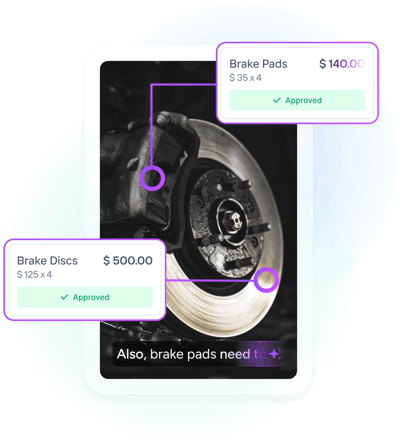
When a customer sees the leak on their phone, they're far more likely to say yes. At Porsche Centre Langley, repair orders where video was used to recommend work averaged $1,993 more than those without. Part of that gap is the bigger jobs that get filmed, but the direction is clear.
3. How should you set hour goals for each tech?
From each tech's own history, not one number for the whole shop. Telling every technician "I need 50 hours this week" is a waste of your time.
A Corvette specialist flags 30 hours of high-skill work, while a quick-lube tech flags 40. Set the same target for both and you'll break them both.
It's the "hot dog vs. steak" model. One tech lives on low-cost, high-volume work (the hot dog). The other lives on high-value, premium jobs (the steak).
The fix
Look at the 90-day average for each individual tech.
If they average 35 hours, the goal is 37.
4. Your parts department is a cash vault
Most dealers treat parts managers like librarians, but they're the gatekeepers to a valuable asset. In 2022, the average U.S. dealership had over $513,900 in parts inventory sitting on the shelves (NADA Data 2022).
When you run a marketing campaign for a recall without checking inventory, you aren't only wasting money and time. You're freezing cash flow and angering customers.
The fix
Be a sniper, not a shotgun. Match your outreach to your shelf inventory.
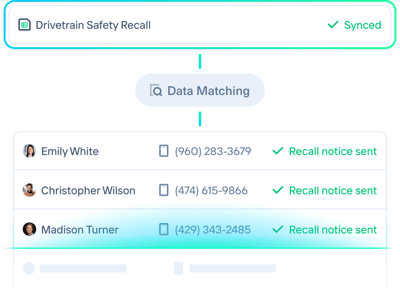
With Kimoby, you can target a campaign by VIN, with recall VINs matched from your DMS. If you have 12 airbags in stock, invite exactly 12 customers. The part (cash) turns right away and the bay fills.
5. How often should advisors update customers?
Every open RO, every day. If the customer calls you for an update, you've already failed.
Even if the update is "I have no update," you send it. Silence breeds anxiety, and anxiety kills CSI.
The fix
Stop making manual phone calls.
Send a message to your "waiting on parts" customers: "Checking on your part, still in transit. Will update you tomorrow."
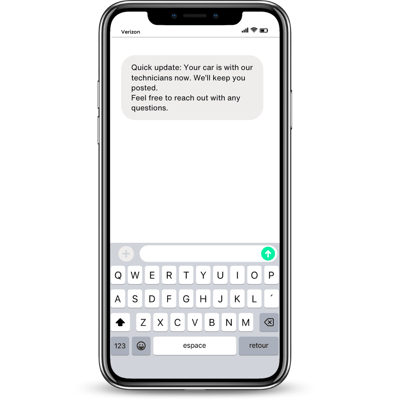
It takes 10 seconds, stops the phone from ringing and keeps the customer calm.
6. The fast exit
The last thing a customer wants is to wait 15 minutes in a cashier line to pay you $800. It kills the experience.
The fix
Move the payment upstream.
Text the invoice while they're still at work. With Kimoby Pay, they pay from their phone with Apple Pay, Google Pay or a credit card, or finance the job with Affirm.
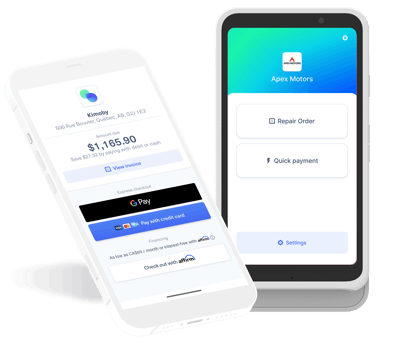
When they arrive, they grab their keys and leave. No "sticker shock" scene at the counter.
So what now?
You don't need a complex new strategy to make fixed ops the most profitable department in your dealership. You need to train your team and remove the friction.
Train your advisors to sell and manage parts like cash. Then automate the communication so your team can focus on the work. The tools are there. You just have to use them.
With Kimoby, your team gets the texting, video, estimates, campaigns and payments in one place. What it doesn't do yet: there's no native online scheduler (it's on the roadmap), and payment write-back to the RO works on CDK only for now.
Want to see how it works in your store? Book a demo.
FAQ
What is a good fixed absorption rate?
At 100%, service and parts gross profit covers all of the dealership's overhead, so every car sold adds profit. A store at 75% still depends on car sales to cover its costs.
What is GP/RO and why does it matter?
GP/RO is the gross profit per repair order. It shows what each visit actually earns, which hours per RO doesn't. Video inspections and clear digital estimates are two of the most direct ways to raise it.
How should a service manager set technician hour goals?
Use each tech's 90-day average flagged hours as the baseline and set the goal slightly above it. A tech averaging 35 hours gets a 37-hour goal, instead of one number for the whole shop.
How do you speed up payment at service pickup?
Text the invoice with a payment link before the customer arrives. They pay from their phone, so pickup is a key handoff instead of a line at the cashier.
Sources
[1] NADA Data 2022, total parts inventory per dealership: $513,917.
[2] Kimoby, Porsche Centre Langley success story. Observed difference between ROs with and without video, not a controlled experiment.
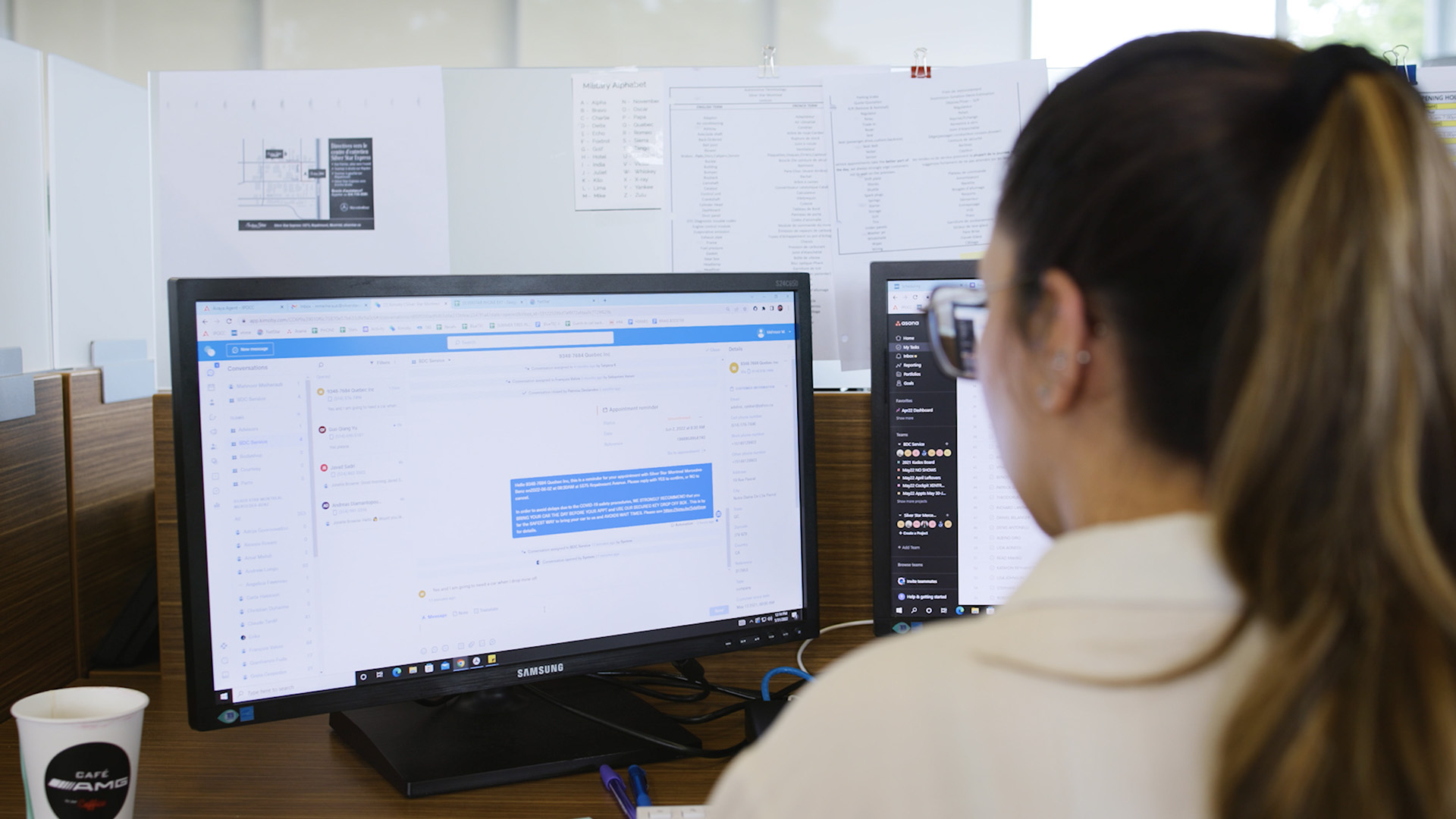
The Fixed Ops Solution for Dealerships Using PBS
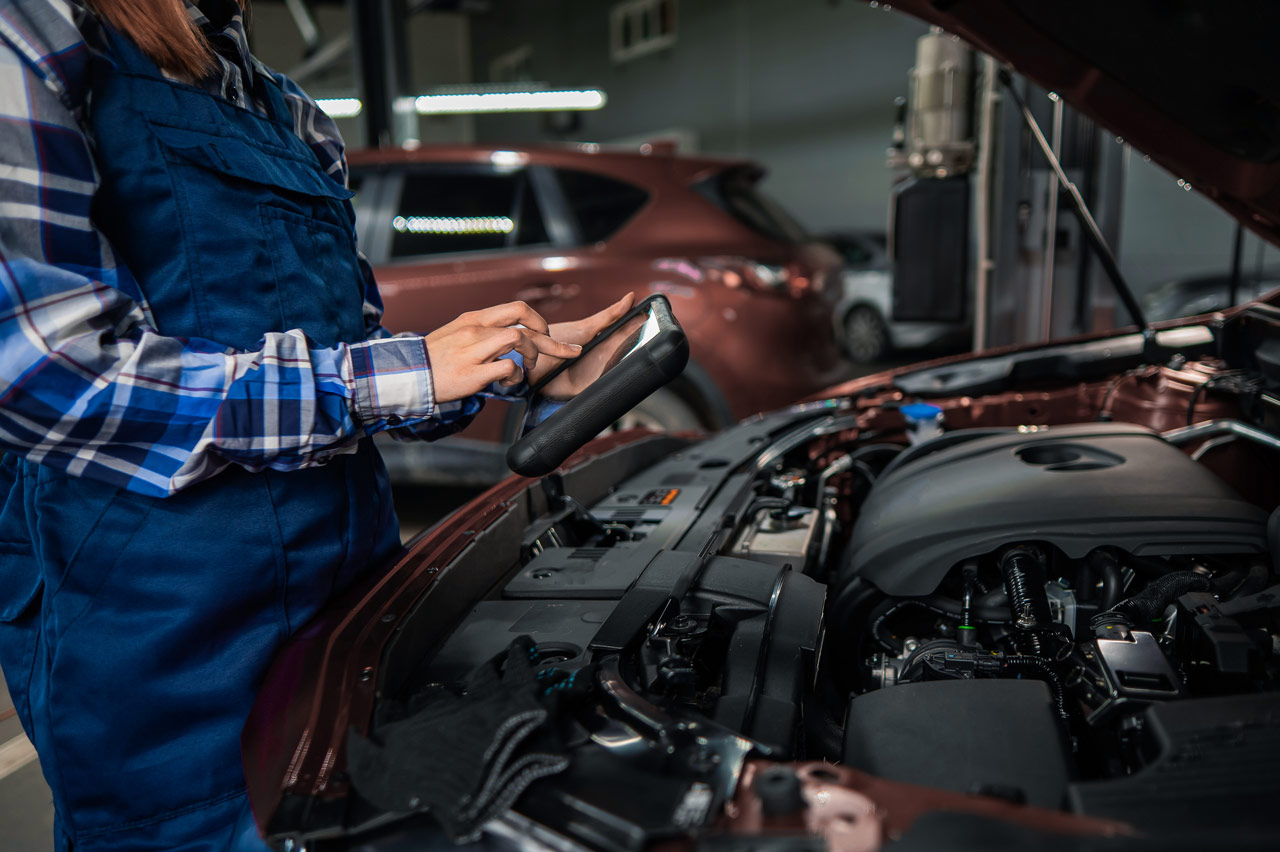
Video MPIs: How Showing the Problem Gets More Work Approved